
Why Managing Myopia Early Makes a Big Difference Later
For many parents, noticing that a child is squinting to read the television screen or struggling to see the whiteboard at school feels like a routine milestone. A quick trip to the eye doctor and a new pair of prescription glasses usually seems to solve the problem. However, looking at nearsightedness, or myopia, as simply a minor inconvenience that requires stronger lenses every year is a common misconception.
Myopia is a progressive eye condition where the eyeball grows slightly too long from front to back, causing distant objects to appear blurry. Because a child’s eyes continue to grow rapidly throughout their school years, their prescription can quickly worsen. Managing myopia early can help reduce the risk of serious eye conditions later in life. At Ambleside Family Optometry, we believe in looking beyond basic vision correction to protect your child’s long-term eye health through proactive, modern care.
The Long-Term Health Risks of High Myopia
When myopia progresses unchecked, the physical elongation of the eyeball does more than just blur distance vision. As the eye stretches, the delicate internal structures, specifically the retina and the optic nerve, are placed under continuous physical stress.
Slowing progression supports healthier eyes and better quality of vision over time. If a child’s prescription is allowed to escalate into high myopia, they face a significantly higher statistical risk of developing severe, sight-threatening ocular conditions in adulthood. These include retinal detachments, where the light-sensitive tissue pulls away from the back of the eye, as well as early-onset cataracts, glaucoma, and myopic maculopathy. By intervening early, we are not just keeping their glasses lenses thinner; we are actively reducing the physical stretching of the eye to safeguard their sight for decades to come.
The Power of Early Intervention
The window of opportunity to make the biggest impact on a child’s vision occurs while their eyes are still developing. Children who receive early myopia treatment often experience improved long term outcomes.
Modern optometry has moved far beyond traditional single-vision eyeglasses, which only correct blurry vision without addressing the underlying elongation of the eye. Today, specialized treatment options can actively signal the brain to slow down this rapid growth. Depending on your child’s unique lifestyle, hobbies, and comfort level, advanced management plans can include custom peripheral-defocus lenses, specialized daytime soft contact lenses, custom orthokeratology lenses or prescription low-dose atropine eye drops. Implementing these strategies during early childhood can dramatically flatten the trajectory of their prescription changes.
Proactive Care at Ambleside Family Optometry
Every child’s eyes change at a different rate, which is why a one-size-fits-all approach to pediatric eye care simply does not work. Ambleside Family Optometry emphasizes proactive care through regular eye exams and ongoing monitoring.
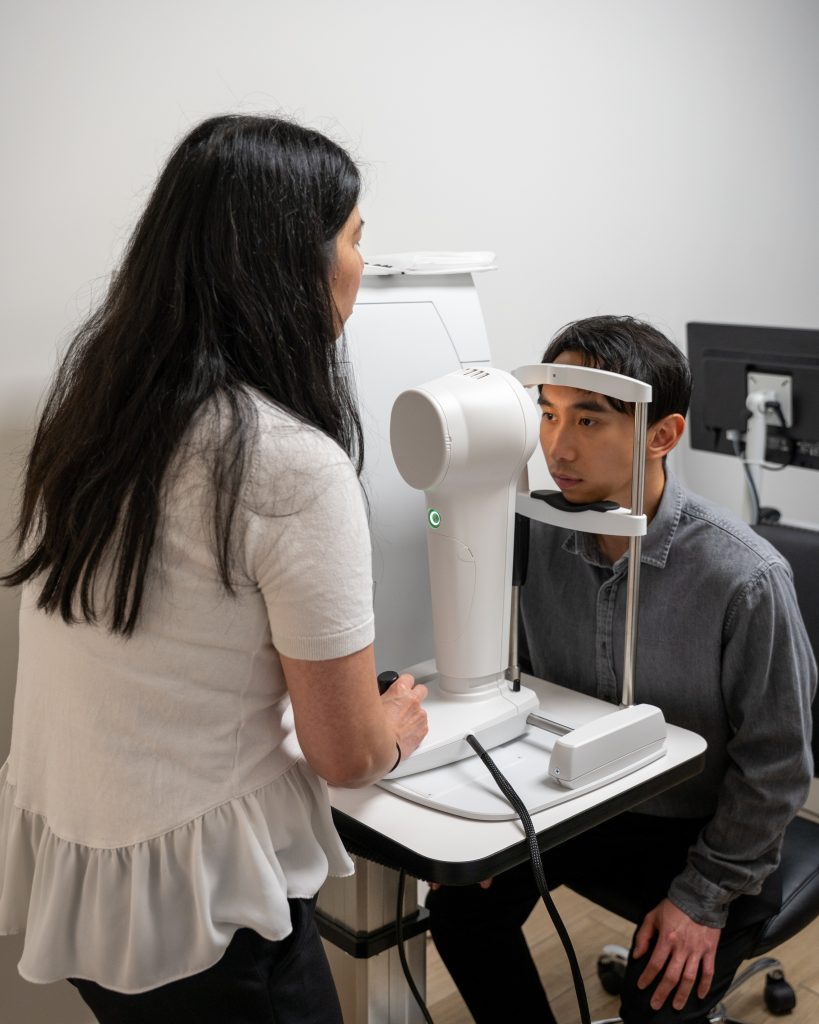
Our clinic utilizes advanced diagnostic tools to track the physical length of the eye over time, rather than just measuring changes in lens power. This precise data allows our optometric team to detect accelerated changes before they even impact a child’s schoolwork or sports performance. By establishing a consistent schedule of ongoing assessments, we can dynamically adjust treatment plans to ensure maximum efficacy as your child grows.
Taking a defensive stance against progressive nearsightedness is one of the greatest health gifts you can provide for your family. An eye exam at Ambleside Family Optometry is an important step in protecting your child’s future vision. If you have noticed your child squinting, complaining of frequent headaches, or if it has simply been more than a year since their last checkup, contact our Southwest Edmonton clinic today to schedule a comprehensive pediatric assessment and explore our custom myopia management solutions.
FAQ
At what age should a child start a myopia management program?
A child can begin a specialized myopia management program as soon as progressive nearsightedness is diagnosed, which often occurs around early school age. The earlier the intervention begins, the more effectively we can slow down the elongation of the eye before the most rapid periods of childhood growth take place.
Can lifestyle changes help slow down the progression of myopia?
Absolutely. Alongside professional clinical treatments, lifestyle adjustments play a supportive role in managing eye growth. Encouraging your child to spend at least ninety minutes outdoors in natural sunlight daily and enforcing regular breaks during prolonged screen time or close-up reading can help reduce visual fatigue and complement clinical treatments.
How do specialized myopia lenses differ from standard glasses lenses?
Standard glasses lenses only focus light directly in the very center of the retina to clear up distance vision, leaving the light at the outer edges focusing slightly behind the eye, which can actually stimulate the eyeball to grow longer. Specialized myopia control lenses correct the central vision while simultaneously curving the peripheral light rays slightly in front of the retina, which sends a biological signal to the brain to slow down the physical elongation of the eye.